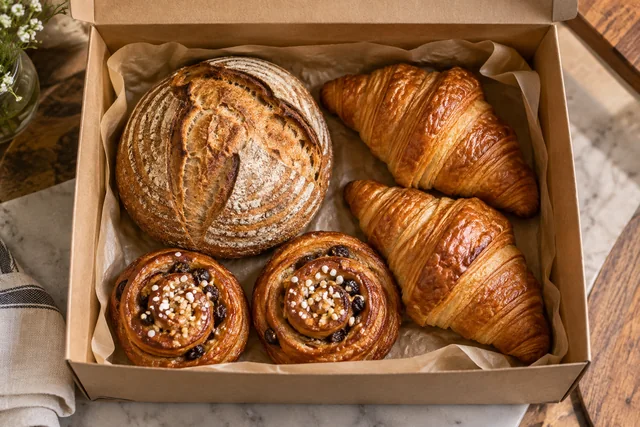
A loaf is easier to understand when you let it cool
Fresh bread is tempting straight from the oven, but the finished loaf continues to change as it cools. In a bakery, the pause between baking and slicing is part of the process rather than time that has been forgotten.
Give the loaf room
Follow the recipe or baker’s guidance for cooling the particular bread. A suitable rack allows air around the loaf, while crowding warm bread can trap moisture. Handle hot trays and bread safely. Different sizes and styles need different treatment, so a single photograph cannot tell you when a loaf is ready to cut.
Look at the crumb without scoring it
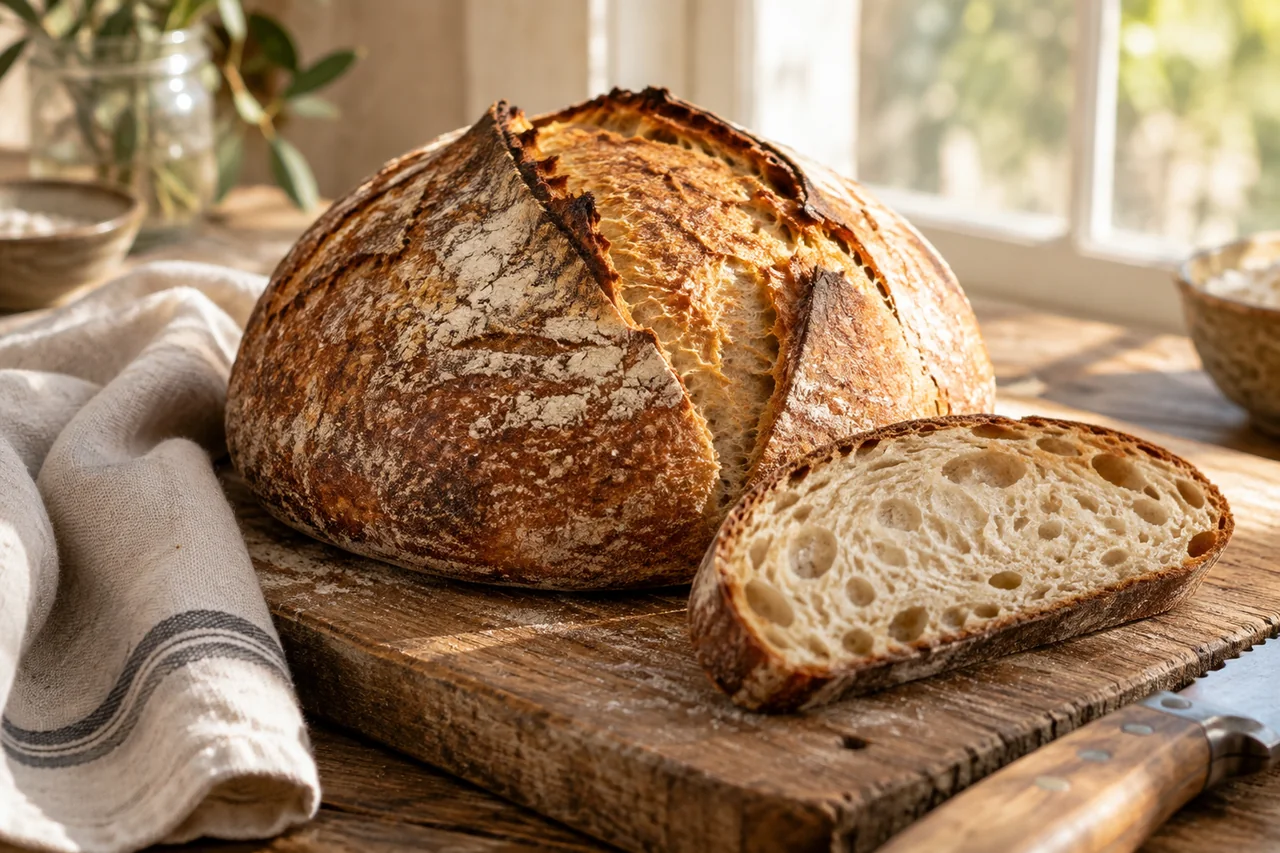
When the loaf is ready, use an appropriate bread knife on a stable board. Notice the crust, aroma and interior in relation to the type of bread. Large holes are not the only sign of a successful loaf. A sandwich bread and an open-textured sourdough are designed to do different jobs.
Store for the way you will eat
Ask the baker how to keep the bread and whether freezing is suitable for the product. Slice and store with clean hands and equipment, and follow food-safety guidance. A little planning can make the last slices as useful as the first. Label any frozen portions so you know what they are and when they were stored. Choose a storage method that suits the bread and the household, rather than assuming every loaf needs the same treatment.